
The Fascination of Construction Machinery: when technology becomes a passion
What fascinates us about excavators, cranes, and wheel loaders – and why this passion lives on in collecting construction machinery models.

An excavator digging through earth. A crane lifting tons like they are toys. Construction machines capture our attention – and that is nothing new.
The enthusiasm for these machines doesn't stop at the construction site fence. Many fans bring their favorite machine home as a model – true to detail, in the right scale, for the display cabinet. This article explains where this fascination comes from, which types of machines exist, and how real technology becomes a collector's item.
Why are we fascinated by construction machinery?
Construction machines combine things that hold a natural appeal for people: visible power, clear functionality, and impressive size. You can see immediately what a machine does – it lifts, digs, pushes, or carries. This immediate clarity makes them more tangible than much other technology.
Added to this is the scale of the action. Construction machines move materials that a human could never move alone, and they do it with a precision that contrasts with their sheer power. Anyone who has watched an excavator operator work with millimeter accuracy understands why it inspires such enthusiasm.
Not least, construction machines are a part of everyday life: they build roads, houses, and infrastructure. They represent progress that you can touch – and it is precisely this connection that makes them a popular subject, whether at the construction fence or as a model on a shelf.
From excavators to cranes: the variety of construction machinery
"Construction machine" is a collective term for very different vehicles. Each category has its own purpose – and its own appeal for fans and collectors.
Excavators
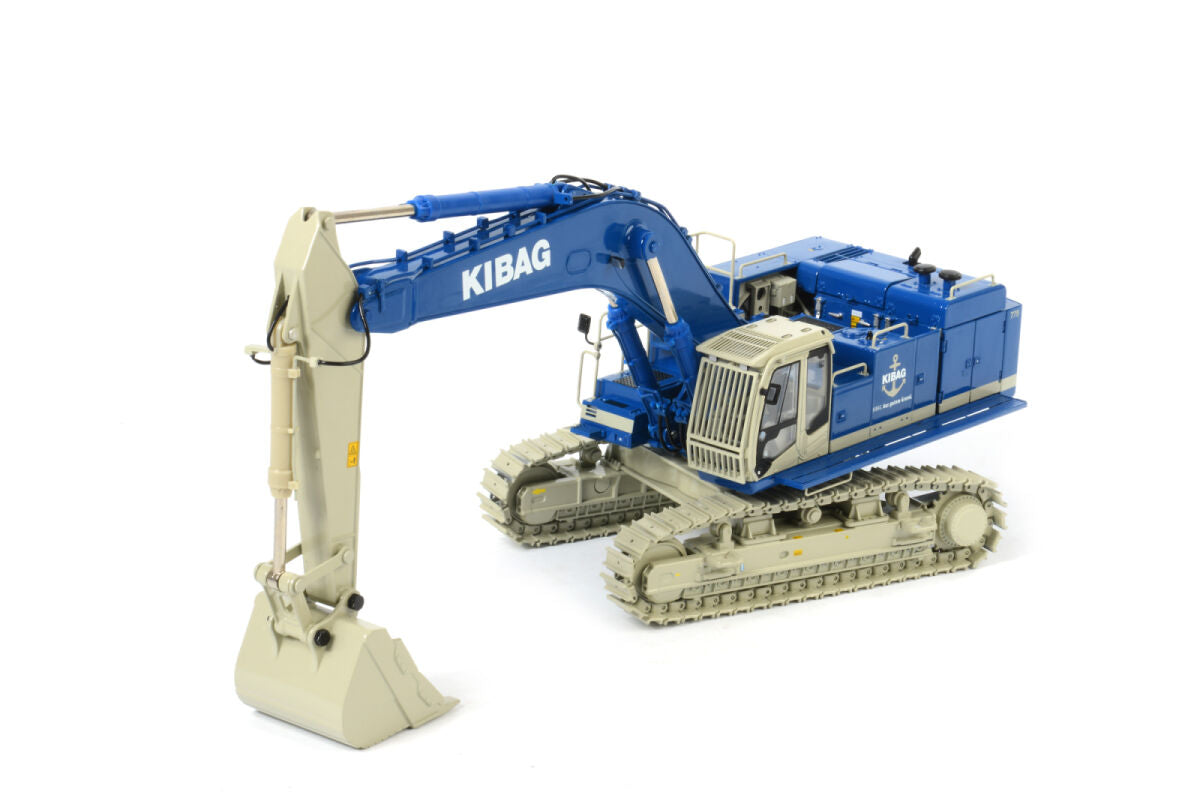
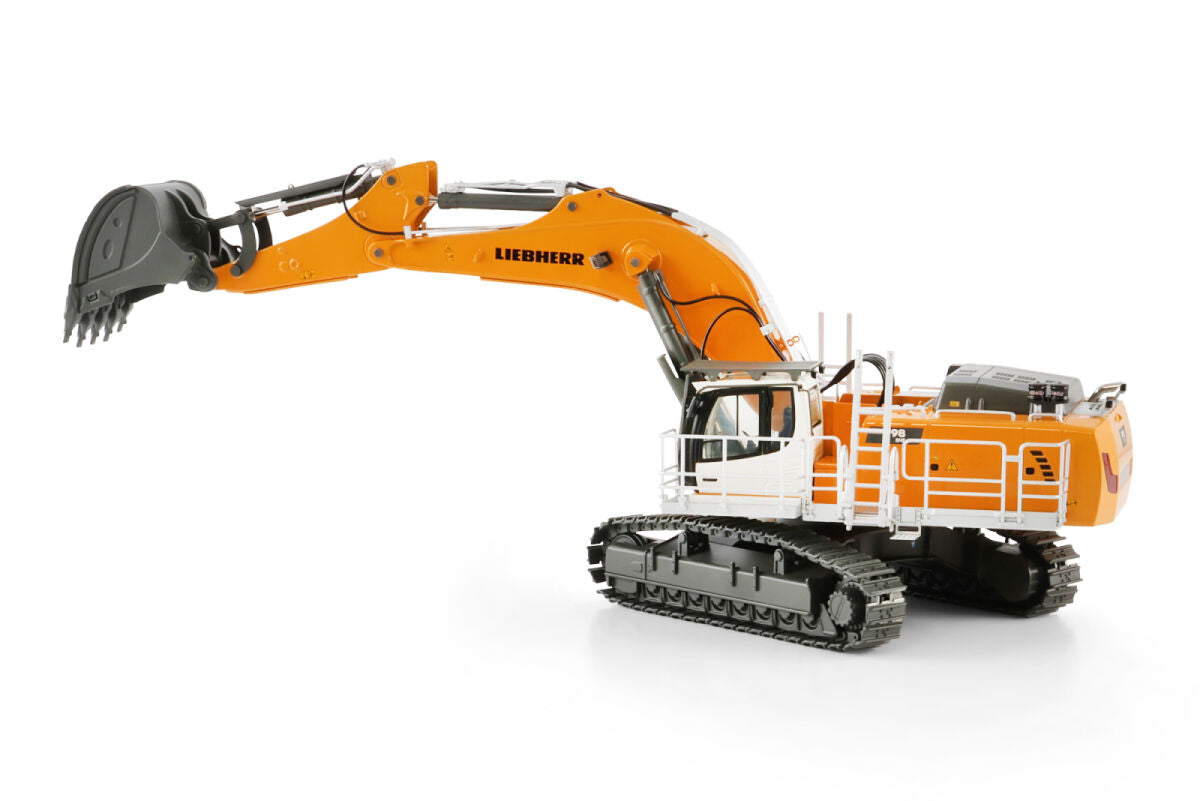
For many, the excavator is the quintessential construction machine. Using a hydraulic arm with a bucket, it digs, lifts, and loads material. They come as compact mini-excavators, wheeled excavators, and crawler excavators on tracks – all the way up to massive machines used in mining. Excavators are a core theme in any collection; you can find a selection in our 1:50 scale excavator models.
Wheel Loaders
Wheel loaders use a bucket to scoop up material and transport it over short distances. Their often articulated design makes them highly maneuverable. They are a common sight on construction sites, in gravel pits, and in agriculture.
Bulldozers and Crawlers
Bulldozers use their blade to push earth and level surfaces. The tracked drive provides traction and distributes weight – ideal for soft or uneven terrain.
Mobile and Tower Cranes
Cranes lift loads to great heights. Mobile cranes are wheeled and quickly operational, crawler cranes move on tracks, and tower cranes define the skyline of major construction sites. Because of their booms and complex mechanics, they are especially popular among collectors – as seen in our 1:50 scale crane models.
Other Interesting Construction Machines
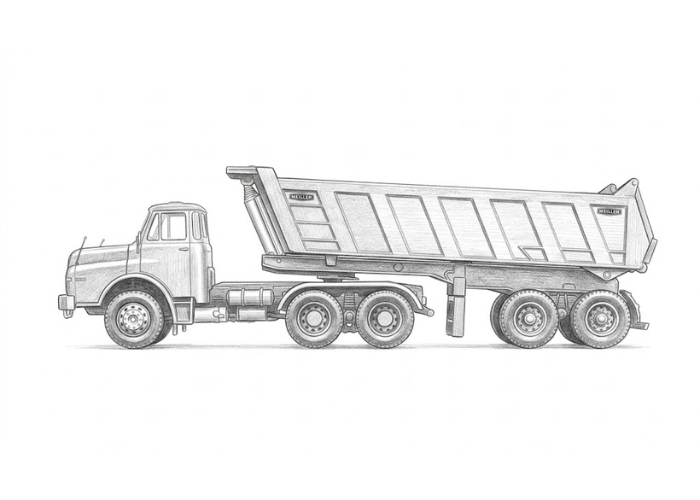
This includes dump trucks and articulated haulers for transporting materials, graders for fine-leveling, rollers for compaction, and telehandlers as flexible helpers. Road transport is handled by tippers and low-loaders – such as those in our tipper models.
When fascination moves to the collector's shelf
At some point, just watching isn't enough. Anyone who loves construction machinery wants to have them closer than is possible in everyday life – and this is where collecting comes in. A good model brings your favorite machine into your display cabinet, at a size you can rotate, inspect, and show off.
For many, this is more than just decoration. A model captures a machine you have operated yourself, were involved with professionally, or simply find impressive. This turns technology into a personal story in miniature.
Construction machinery models: technology on a small scale
A high-quality construction machinery model is a piece of engineering in its own right. Many models consist primarily of metal (die-cast zinc) with plastic components and replicate the functions of the original: movable booms, rotating upper carriages, steerable axles, or tilting dump bodies.
The appeal lies in the detail. A good model translates proportions and mechanics so that the machine feels "right" even in miniature. This is exactly why construction machinery models are so appropriate for technology enthusiasts: you recognize the same logic that defines the original machine.
What do scales like 1:50 or 1:87 mean?
A scale describes the size ratio between the model and the original. 1:50 means: The model is 50 times smaller than the real vehicle – one meter on the original equals 2 centimeters on the model. At 1:87, it is about one centimeter; at 1:32, it is a little more than three.
For construction machinery models, 1:50 is a popular collector's scale: large enough for many details, compact enough for a display cabinet. 1:87 corresponds to the H0 nominal size, known primarily from model trains and defined by the European Model Railway Standards (NEM) of MOROP. 1:35, on the other hand, is a typical scale in military and plastic scale modeling.
| Scale | 1 m Original ≈ | Common for |
|---|---|---|
| 1:32 | 3.1 cm | Tractors, larger vehicles |
| 1:50 | 2.0 cm | Construction machinery, trucks, cranes |
| 1:87 (H0) | 1.1 cm | Model railway settings, dioramas |
Read more in our comparison: 1:50 vs. 1:64.
Attention to detail: What makes a good construction machinery model
Quality becomes apparent upon closer inspection. Many collectors look for these points:
- Material quality – high metal content, cleanly finished plastic parts.
- Functions – movable booms, rotating upper carriages, steerable axles, tilting dump bodies.
- Proportions – accurate representation of the original in the chosen scale.
- Printing & add-on parts – clean lettering, fine details like mirrors or railings.
- Packaging – protects the model and, for many collectors, belongs with it.
You can read about which brand has which strengths in our brand overview.
Historical machines and modern construction machinery as collector's models
Some collectors are enthusiastic about current machines with state-of-the-art technology, others prefer classics from past decades. Both have their charm: modern models excel in detail, while historical subjects tell a piece of technical history and evoke memories of construction sites from years gone by.
Many collections intentionally mix the two – this creates a small cross-section of the development of construction machinery. You can find an example of a historical commercial vehicle in our profile of the Mercedes-Benz LAK 1624 "Rundhauber" tipper.
Things to consider at the beginning
Worth clarifying
- A scale as a common thread (often 1:50)
- A theme: brand, machine type, or era
- Plan space and display cases realistically
- Better a few good models than many arbitrary ones
Good to know
- Keep the original packaging
- Pay attention to finish and functionality
- Protect from dust and sunlight
- Let it grow slowly – collecting is not a race
Collecting construction machinery – a hobby with many facets
The beauty of collecting: there is no right or wrong. One person builds entire construction site dioramas, another displays individual machines as eye-catchers in a cabinet. Some concentrate on one brand, others on one type of machine like excavators or cranes. This is how a hobby turns into a very personal collection.
To keep the models looking good for a long time, it is worth looking at our care guide – from dust protection to storage.
The fascination remains – only the scale changes.
Whether at the construction site fence or in the display cabinet: it is the same enthusiasm for technology, power, and function. As a model, your favorite machine becomes a piece of history in miniature – to look at, collect, and pass on.
Frequently Asked Questions
Why do construction machines fascinate so many people?
Because they combine visible power with clear function and impressive size. You can see immediately what a machine does – this makes them tangible and impressive at the same time.
What types of construction machinery are there?
These include excavators, wheel loaders, bulldozers, mobile, crawler, and tower cranes, as well as dump trucks, graders, rollers, and telehandlers. Each category has its own purpose.
What does the scale 1:50 mean?
The model is 50 times smaller than the original. One meter on the real vehicle corresponds to 2 centimeters on the model. 1:50 is a common scale for construction machinery models.
What does the scale 1:87 stand for?
1:87 corresponds to the H0 nominal size, known primarily from model trains and defined by the European Model Railway Standards (NEM). One meter of the original becomes about 1.1 centimeters.
How do I recognize a good construction machinery model?
By high material quality, accurate proportions, clean printing, and functional details like a movable boom, rotating upper carriage, or steerable axles.
Are construction machinery models a suitable hobby for beginners?
Yes. A good start is to focus on one scale and one theme (brand, machine type, or era) and let the collection grow at its own pace.
Why are historical construction machines interesting as models?
They tell a piece of technical history and evoke memories. Many collectors combine historical and modern models to create a cross-section of the development of construction machinery.
Sources and further information
- MOROP – European Model Railway Standards, NEM 010 "Scales, Nominal Sizes, Track Gauges" (Definition of nominal size/scale, e.g., H0 = 1:87): morop.eu
- Wikipedia – "Nominal size H0" (H0 = 1:87 in continental Europe, standard gauge 16.5 mm): de.wikipedia.org
- Miniatur Wunderland Hamburg – "Track H0" (H0 as the most common model size, scale 1:87): miniatur-wunderland.de

Leave a comment
This site is protected by hCaptcha and the hCaptcha Privacy Policy and Terms of Service apply.